What can Left 4 Dead Can Teach Us About Kids Games

Posted by:
March 14, 2012 at 1:19 am


Zombies, guns and explosions are things one might associate with the videogame Left4Dead, but these cooperative types of videogames share similar qualities as videogames for children.

Videogames created for kids focus primarily on child development and can be used as a means supplement learning.

According to Anne Richards, No Crusts Interactive, games for kids should attempt to incorporate like in the game Left 4 Dead the aspects of cooperative game play and strategy making these aspects more prevalent in games for kids.

“Taking advantage of everyone’s strengths and weaknesses, while zombies aren’t appropriate for children, Left 4 Dead has players working towards a goal together and communicating with another are some things that would be good for children’s games,” said Anne Richards. Read more about Left4Dead


Can Gaming Make the World Better?

Posted by:
March 13, 2012 at 12:27 pm


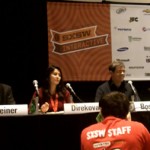
SXSWi panel "Can Gaming Make the World Better?"

To kick off this Sunday morning of SXSWi, all those with altruist concerns congregated for the enlightening panel called “Can Gaming Make the World a Better Place?”. This panel was a must-see for I feel a strong, magnanimous aclivity for any person or organization working to improve the world and not just their bank accounts.

The panel consisted of 5 panelists from a diverse array of organizations and companies that utilize and employ gaming and “gamification” in their daily arsenal. The panelist line up included George Weiner from Dosomething.org, Adam Bosworth of Keas, Samantha Skey from RecycleBank, and Nadya Direkova game mechanic from Google inc. The overarching theme of this morning session was the potential of gaming and gamification inacting large scale good by providing incentives to educate and motivate end-users.

Fortuantely for us viewers, the panel was superbly moderated by Gabe Zicherman from www.Gamification Co. (great gamification blog with no room for shameless product placement). From the beginning, Gabe set the record straight and provided a great forum for discussion on a number of intriguing topics for instance reward systems and how its related inciting positive actions and results.

After much discussion, what stood out to this viewer was the battle-tested representative from DoSomething.org George Weiner. His repertoire of experience provided numerous, useful responses and many effective strategies regarding “inciting” a population with goals of deriving social good.

“Make it fun, everything must be fun in some sense. What we are terrified of is competition, there shouldn’t be a loser when competing for positive social change” -George Weiner, Dosomething.org

Adam Bosworth of Keas dispensed a number of health-related responses affording a unique angle to “Gamification” and human welfare. A number of queries he answered were situational examples relating his experience as a parent in order to clearly state his position or knowledge

“The primary goal is to have users constantly challenged to succeed and try to get people to compete against themselves instead of each other”

As you can see in the video above (with George), the world can be made better with gaming and “Gamification”. Those who are looking to impact the world with “Social Good” through Gamification need to focus on effective strategies and creative execution rather than shameless adoption resulting in countless failures.


A Crash Course in Becoming SuperBetter

Posted by:
March 9, 2012 at 10:57 pm


Gamify and Socialize: Beyond the Buzzwords

Posted by:
March 9, 2012 at 5:18 pm


Bing Gordon is currently a partner at Kleiner Perkins Caufield & Byers, a world-leading venture capital firm in Silicon Valley.  Gordon has a long history in the gaming arena, including spending 26 years at Electronic Arts (EA), a global interactive entertainment software company. With Kleiner Perkins Caufield & Byers, Gordon has invested in social gaming companies such as Zynga.  Gordon understands the influence of social and gaming in our current society and that this influence will only grow.  He emphasized that companies must embrace gaming’s influence, including recognizing that each employee has a different skill set, small teams work best and a reward system increases motivation.

Gordon speaking at SXSWi


Gordon has been involved in social and gaming for nearly 30 years, so what better person to discuss the influx and importance of gaming in our social world?  Bloomberg BusinessWeek reporter Brad Stone sat down with Gordon for his solo panel at the Austin Convention Center.  Gordon delved into the topic of how companies can utilize gaming to motivate employees, especially those under 35.  According to Gordon, people make their lifelong media choices at age 16 and hiring those who were around 16 when the Internet exploded is key for companies.  Gordon argued that every Fortune 500 company should have a gamer, because they understand the fast-paced, instant feedback world of social.  People who grew up playing games look at the world differently, and they understand the concept of failing fast.  Most people are afraid to jump in and take a risk, but gamers understand that failing is necessary.  Additionally, gamers relate to people under 35 and they know what these consumers want.

Bing Gordon


Gordon argues that, “building a company is like building and playing a game.”  The world looks like games, and when you run a company, you must provide instant feedback.  Companies tend to think that each employee has the same skill set.  Instead, Gordon argues that a company should be structured like a game, including having teams of five and providing instant feedback and reward systems.  One way to design your company like a game, is giving privileges to employees.  Think of these privileges like levels in gaming.  “Once you get people believing in virtual rewards this doubles their behavior.  Creating a system of virtual rewards can change behavior, but the behavior has to already be there.”  This generation wants to learn by doing and companies must utilize this spirit.  Gordon believes that using a scoring system and creating a win-win environment improves both the work and spirit of employees.  “Optimism breeds creativity.  We must create a platform of confidence for employees and gaming is one way to do this.”  We are moving to an age of learning by doing and this panel provided attendees the opportunity to hear a true gaming pioneer speak about the present and future for both companies and entrepreneurs.  Gordon reiterated the key point that companies and people alike must not be afraid to fail fast!  Follow Bing Gordon on Twitter.

Graphic of Gordon's Discussion


Preview: Can Gaming Make the World Better?

Posted by:
March 8, 2012 at 4:51 pm


For decades, video games have been a way for many to relax, and escape the day-to-day reality. A place you can immerse yourself in a fantasy world, where the impossible is possible. Thanks to technology and accessibility, gaming has garnered a much larger “casual” audience over the last few years. Now, with smart phones, users can download games onto their iPhone or Android, and take them anywhere.

Take the game Angry Birds, for instance. Since its release for the iPhone in 2009, it has been purchased over 12 million times in Apple’s App Store. It has been downloaded over 500 million times across all the different platforms it is available for.

This year, at South By Southwest Interactive, the panel of “Can Gaming Make the World Better” will focus on social gaming and how it can motivate people to change their lives. Continue reading “Preview: Can Gaming Make the World Better?” »


Slider by webdesign